
When a family asks for a service that is “more personal,” they are asking for help in creating a true reflection of the person they lost. A personalized funeral service moves beyond standard templates to honor a unique life with specific, meaningful details. This guide offers ten substantial ways you can help families create a service that feels authentic, memorable, and deeply healing.
1. Create a Sensory Experience with Scent and Sound
Our memories are powerfully linked to our senses, especially smell and sound. Engaging these senses can create an immersive and deeply personal atmosphere that a standard visual display cannot match. It’s a subtle yet profound way to make the presence of the deceased felt in the room.
First, talk with the family about significant scents. Did their mother have a signature perfume she wore every day? Did their father always smell of sawdust from his workshop or pipe tobacco? Perhaps the scent of baking bread, fresh-cut grass, or a specific flower from their garden instantly brings them to mind. Once identified, you can introduce this scent subtly into the visitation or service space. This could be through a few drops of essential oil in a diffuser, a carefully placed sachet, or even a single, unlit scented candle (check venue regulations). The goal is a gentle presence, not an overpowering aroma.
Sound works in a similar way. Go beyond a simple playlist of favorite songs. Consider the ambient sounds of a place they loved. If they were an avid angler, the sound of a bubbling stream could play softly in the background. If they loved the ocean, gentle waves. For a city person, it might even be the low hum of urban life. These soundscapes, available through many streaming services, can create a powerful sense of place and peace. This approach allows you to personalize a funeral service in a way that is felt more than it is seen, offering a unique form of comfort to those in attendance.
2. Curate a Themed Visitation Room
A visitation doesn't have to be a lineup of flower arrangements in a neutral room. Instead, you can help a family transform the space into a temporary museum dedicated to the life lived. This approach turns a passive viewing into an active, engaging experience of remembrance.
The key is to identify a central passion or hobby and build the environment around it. For a passionate gardener, this could mean bringing in potted plants they nurtured, displaying their favorite gardening tools, and using seed packets as decorative elements. For a woodworker, you could set up a display of their handcrafted pieces, from small carvings to larger furniture, along with their favorite tools and wood shavings in a decorative bowl. For an artist, the visitation room can become a gallery of their work, professionally lit and arranged.
To facilitate this, guide the family through a brainstorming session. Ask questions like, “What did they do with their free time?” or “If you were to walk into their favorite room at home, what would you see?” Encourage them to bring in physical items that tell a story. A collection of vintage cameras, a library of well-loved books, a display of quilts they sewed, or even a prized motorcycle parked just outside the entrance (with permission) can make the space feel deeply personal. This method doesn't just show what the person loved; it invites guests to step into their world for a moment.
3. Design Interactive Memory Stations
A guest book is a tradition, but it can feel formal and limiting. Interactive stations invite guests to participate in the act of remembering in a more dynamic and personal way. These stations can generate a collection of memories that the family will treasure long after the service ends.
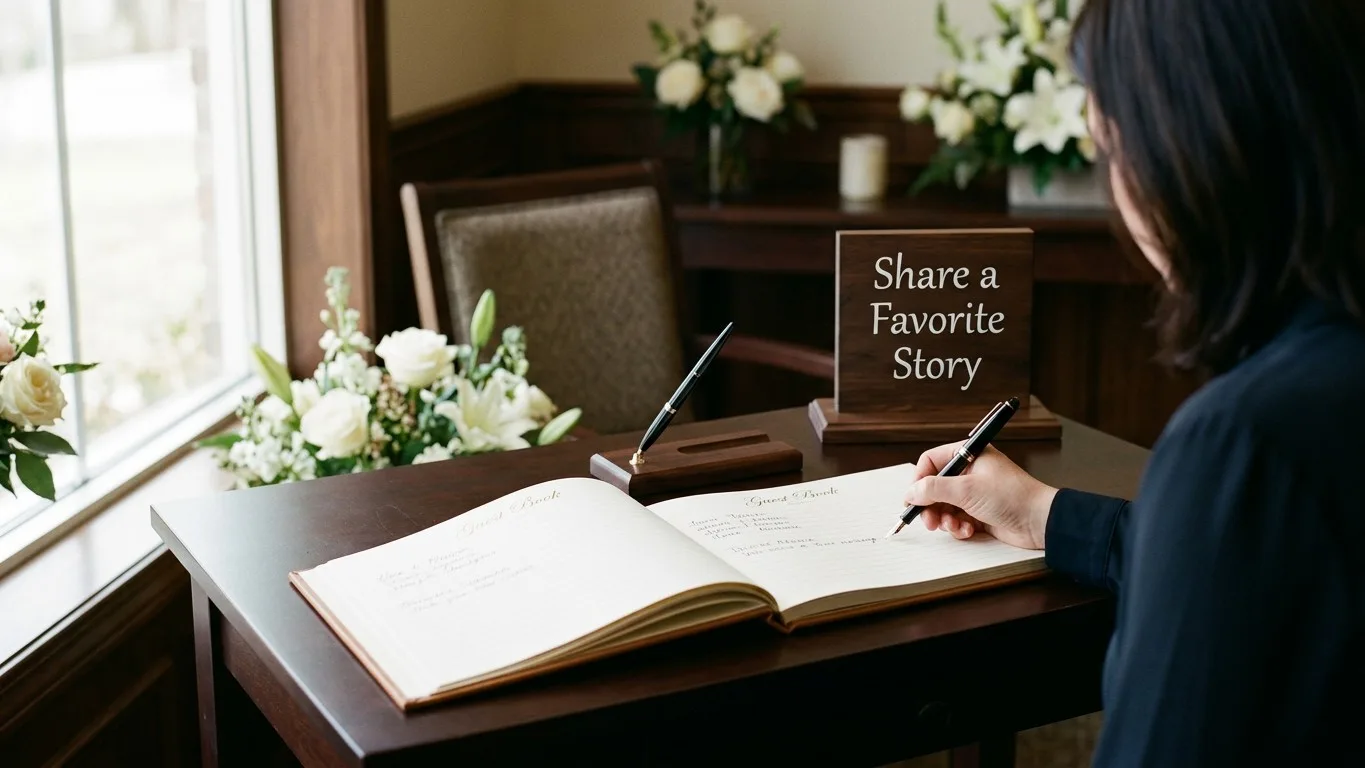
Move beyond a simple signature and offer guests a specific prompt. Set up a small table with high-quality cards and good pens, labeled “Share a Favorite Story.” The prompt focuses the memory-sharing and encourages guests to write down anecdotes the family may have never heard. Another powerful idea is a “Memory Map.” Display a large map (of a state, country, or the world) and ask guests to place a pin on the location where they met the deceased or shared a significant memory, with a small tag to write a brief note.
For someone known for their hospitality or cooking, a “Recipe Exchange” is a beautiful tribute. Display one of their signature recipes on a card for guests to take, and provide blank cards for guests to share their own favorite recipes in return, creating a communal cookbook of comfort. For a more modern approach, you can set up a station with a tablet where guests can record a short video message for the family. These interactive elements give guests a meaningful task and create tangible, multi-faceted keepsakes that capture a much richer portrait of the deceased than a simple list of names.
4. How to Personalize a Funeral Service with a Legacy Project
While flowers are a beautiful gesture, some families find more meaning in a legacy that continues to have a positive impact. A legacy project channels the grief and goodwill of a community into a lasting, tangible tribute. As a funeral director, you can guide families in transforming the impulse to “do something” into a meaningful, long-term project.
The first step is to discuss what was most important to the deceased. Was it education, animal welfare, community service, or nature conservation? The project should align with their core values. Instead of simply suggesting donations to a large national charity, explore more specific and local options. Could funds be collected to establish a small, named scholarship at their alma mater or local high school for a student pursuing a field they loved?
Other options include dedicating a park bench in their favorite park, planting a tree or a small grove through a local conservancy, or funding a specific piece of equipment for a local animal shelter. You can also help the family organize a future “Day of Service” in their honor, where friends and family volunteer for a cause they championed. Your role is not to manage the project long-term, but to present these possibilities, provide initial contact information for relevant organizations, and help the family frame this option in the obituary. For example, “In lieu of flowers, the family invites you to contribute to a scholarship fund being established in [Name]'s memory. Details will be shared soon.” This transforms grief into positive action.
5. Offer a Culinary Tribute
Food is deeply tied to comfort, culture, and memory. Offering a specific food or drink that was a favorite of the deceased is a simple but incredibly powerful way to personalize a reception or gathering. It’s an act of communion, allowing guests to share an experience the person once enjoyed.
The power of this idea is in its specificity. Don't just serve “coffee and cookies.” Ask the family, “Was there a specific bakery they loved? A particular brand of coffee they drank every morning? A special dish they only made on holidays?” Serving the exact oatmeal cookies from the local bakery they visited weekly, or the specific type of tea they drank every afternoon, creates a much stronger connection.
This can be as simple or elaborate as the family wishes. For a post-service reception, you could feature a “snack bar” with all of their favorite guilty pleasures—a specific brand of potato chips, a certain type of candy, or a beloved soda. For someone who loved to host, you could serve a small portion of their signature chili or lasagna, with the recipe available for guests to take. You could even organize a simple toast with their favorite whiskey or non-alcoholic beverage. This act of sharing food creates a warm, communal atmosphere and provides a natural starting point for guests to share stories and memories.
6. Organize a “Living Eulogy”
A single, formal eulogy can place a lot of pressure on one person to capture the entirety of a life. A “living eulogy” is a more collaborative approach, inviting several people to share brief, focused memories. This creates a richer, more multi-dimensional portrait of the deceased, showing how they were seen through the eyes of many different people.
Work with the family to identify a small group of people from different parts of the deceased’s life—a family member, a coworker, a childhood friend, a neighbor. Instead of asking them to deliver a full eulogy, give them a specific, gentle prompt and a time limit (e.g., two minutes). Prompts could include: “Share one piece of advice they gave you that stuck with you,” “Tell us about a time they made you laugh,” or “Describe one act of kindness you witnessed.”
This structure is less intimidating for speakers and more engaging for attendees. It prevents the repetition that can sometimes occur in open-mic scenarios and ensures the stories are varied and positive. As the director, you can moderate this portion of the service, introducing each speaker and their relationship to the deceased. This collective storytelling paints a picture of a full and complex life, celebrating the different roles they played and the many lives they touched. It’s a powerful way to show, not just tell, who they were.
7. Provide a Meaningful Parting Gift
A parting gift, or favor, gives guests a tangible object to take with them, extending the comfort and memory of the service. To be truly meaningful, the gift should be a direct reflection of the deceased’s life and passions, rather than a generic memento.
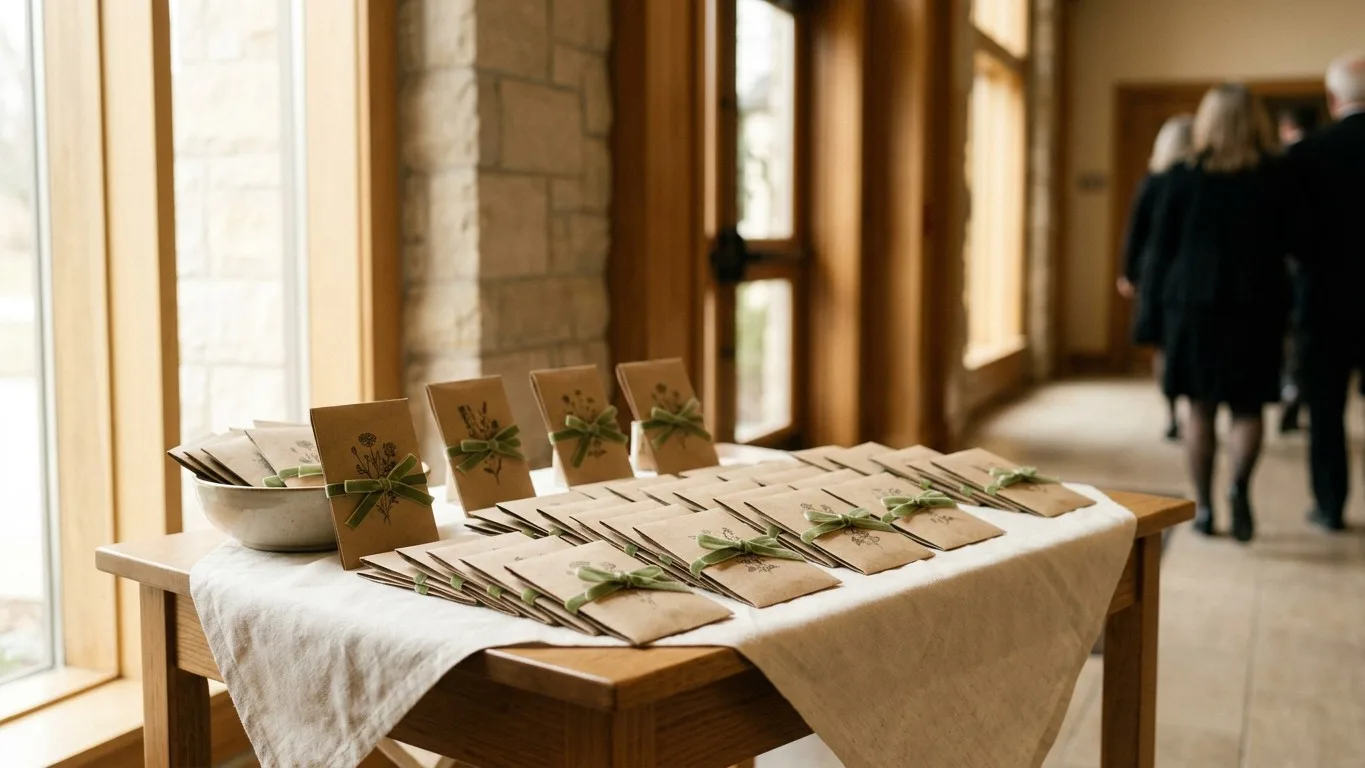
Brainstorm with the family about items that represent a core part of who the person was. If they were an avid reader, you could give away copies of their favorite book of poetry or a custom-designed bookmark with a meaningful quote. For a gardener, a small packet of their favorite flower seeds with planting instructions is a beautiful and hopeful gesture. For a passionate cook, a small jar of their favorite spice blend or a wooden spoon tied with a ribbon would be fitting.
The key is authenticity. If the person was known for their letters, perhaps a nice pen and a single sheet of personalized stationery. If they were a musician, a custom guitar pick. These items serve as story-starters. When a guest plants the seeds or uses the bookmark, they will remember the person and the day. This simple act transforms a generic takeaway into a continuing bond. While you're helping families with these unique ideas, keeping all the details straight is crucial. Effective digital case management centralizes every family request and service detail, ensuring nothing is overlooked during a complex and emotional time.
8. Incorporate Handwritten Elements
In our digital world, the imperfections and character of handwriting carry enormous emotional weight. Incorporating a sample of the deceased's handwriting into the printed materials for the service is a deeply personal touch that is often overlooked.
Ask the family if they have any examples of their loved one's handwriting—a signature from a letter, a note on a card, a line from a journal, or even a favorite recipe written in their own hand. This small piece of their identity can be scanned and used in a variety of ways. Their signature could be printed at the bottom of the service program or on the back of a memorial card. A short, handwritten phrase like “With love,” or “All my best,” could be used as a recurring design element.
If a good sample is available, you can even use their handwriting to create a font for the program headings. This requires more technical effort but creates a truly unique and beautiful effect. The presence of their handwriting makes the printed materials feel less like an official document and more like a personal message. It’s a visual reminder of their physical presence in the world, a tangible trace of their hand that provides a quiet, profound sense of connection for the family and guests.
9. Map Their Life's Journey
Many lives are defined by movement and place—a childhood home, a college town, a first apartment, a special vacation spot. Creating a visual map of this journey can be a compelling and informative way to tell a life story, especially for guests who may only know one chapter of it.
This can be done in several ways. For a physical display, you can use a large corkboard with a map of the state, country, or world. Use different colored pins and yarn to trace their path through life, with small, captioned photos at each key location. This provides a visual timeline that guests can explore at their own pace during a visitation, sparking conversations and shared memories.
For a digital version, this map can be a central part of a memorial video. Using simple animation, you can show a path being drawn from one location to the next, with dates and photos appearing as each new place is reached. This is especially powerful for telling stories of immigration, military service, or a career that involved extensive travel. It helps contextualize a life, showing the full scope of their experiences and the ground they covered. This approach helps all in attendance appreciate the breadth and richness of the life being honored. Creating such detailed tributes becomes easier when your daily operations are efficient. Streamlining funeral home operations gives you the time and mental space to focus on these creative, high-touch elements of care.
10. Curate a Processional or Recessional with Meaning
The beginning and end of a service are moments of high symbolic importance. While often overlooked, the processional and recessional can be personalized to create a powerful, non-verbal statement about the deceased’s life and legacy.
Consider who leads the casket or urn. Traditionally it is the pallbearers, but this can be adapted. For a teacher, it could be a group of former students. For a military veteran, it would be a color guard. For a musician, perhaps their bandmates could carry their instrument in the procession. This simple act honors the communities that were most important to them.
The path of the procession can also be significant. Instead of just moving from the back of the chapel to the front, could the procession pause for a moment by a display of their artwork or a tribute from their colleagues? The recessional is a final opportunity to make a statement. Instead of filing out to solemn organ music, what if the service ended with their favorite upbeat song? For a vibrant, joyful person, leaving the service to the sound of a Dixieland band or their favorite rock anthem can feel more authentic than a somber hymn. It reframes the final moment from one of loss to one of celebration for a life well-lived.
The Power of Personalization
Helping a family personalize a funeral service is one of the most important things we do. It is the process of listening deeply and translating a lifetime of stories, quirks, and passions into a ceremony that provides true comfort. These unique touches are what families remember, and they are what transform a difficult day into a meaningful and healing tribute.
Kindred’s case management tools are designed to help you keep track of every unique detail a family requests. From custom notes in the arrangement file to checklists that ensure a special item isn't forgotten, our software supports the art of personalization. See how Kindred can help you focus more on the families you serve.