
Funeral parlour software built around the South African funeral
From the collection and the notice of death to a Saturday burial and, for many families, the unveiling that follows, Kindred holds each funeral on one record your whole team works from, with the family's cover noted beside it.
Now welcoming funeral homes in South Africa
-
Collecting the deceasedFrom the hospital or the family home; the date of collection goes on the notice of death
Where it lives in Kindred: First callThe case opens when you collect, with the date, the place and the informant's contact taken down once. -
The DHA-1663 notice of deathThe Home Affairs form in block letters, with sections for the informant and the undertaker, and fingerprints
Where it lives in Kindred: Details captured onceParticulars of the deceased and the informant live on the case, with copies of their IDs stored alongside. -
The funeral policy or burial societyConfirming the cover that will pay for the funeral
Where it lives in Kindred: Custom fields and checklistPolicy and society details go in fields you define, and a checklist item follows the claim papers until they are ready. -
The burial orderNo burial may take place until one has been issued
Where it lives in Kindred: Checklist itemA checklist item stays open on the case until the burial order is in hand, so the whole team can see it is still outstanding.
Kindred's screens keep their own names. These are your steps, matched to where they're handled.
The rest of the work, matched the same way
-
The night vigilFamily and community keep watch with the deceased, often at home before the funeral
Where it lives in Kindred: Events on the caseAdd the vigil as its own event, with the address and the staff who will be there. -
The Saturday funeralMost funerals are held on Saturdays or at weekends
Where it lives in Kindred: Staff on every eventEach Saturday service and burial lists its venue, time and team, so every branch knows who is going where. -
Place of burial and grave numberRecorded in the undertaker's section of the notice of death
Where it lives in Kindred: The case recordCemetery, grave number and burial date stay on the case for the whole team and for every document drawn from it. -
The tombstone unveilingA later ceremony at the grave, held when the family is ready
Where it lives in Kindred: Follow-up tasksSet a follow-up task so your team stays in touch with the family about the unveiling.
How funeral homes work in South Africa

Saturdays, vigils and the whole community
Most South African funerals take place on a Saturday or over the weekend, a pattern rooted in migrant workers who could travel home only at weekends. A night vigil, a large gathering, a shared meal and, in some families, ritual slaughter can all form part of the funeral, and customs differ among Zulu, Xhosa, Pedi, Venda and other communities.
Burial remains the dominant choice and cemetery space is under pressure in the big cities. A tombstone unveiling often follows later, especially in African traditional religion, though some churches discourage it. Families and congregations are routinely multilingual in a country with twelve official languages, South African Sign Language among them.
Funeral policies and burial societies
Funeral cover is widespread, and for many families a funeral policy or a burial society is how the funeral is paid for. Policies must be underwritten by a registered long-term insurer and sold by a financial services provider authorised by the FSCA. Burial societies are member-funded schemes with roots among migrant mineworkers in the late 1800s, and current regulation treats them as funeral insurance providers.
Home Affairs, the municipality and the associations
A death is reported to Home Affairs, to SAPS, especially where there is no Home Affairs office, or to a designated funeral undertaker, on the DHA-1663 notice of death. Home Affairs issues the death certificate, and no burial may happen without a burial order. Designation, applied for on Form DHA-1774, calls for a municipal certificate of competence, SARS registration, membership of an undertakers' association and a written exam.
The certificate of competence is issued by the municipality's environmental health service after an inspection of the premises, and must be renewed, every two years in the Garden Route District, for example. There is no single regulator for undertakers. Associations include the National Funeral Directors' Association of Southern Africa, the South African Funeral Practitioners' Association and the National Funeral Practitioners Association of South Africa.
Shaped around your funeral home
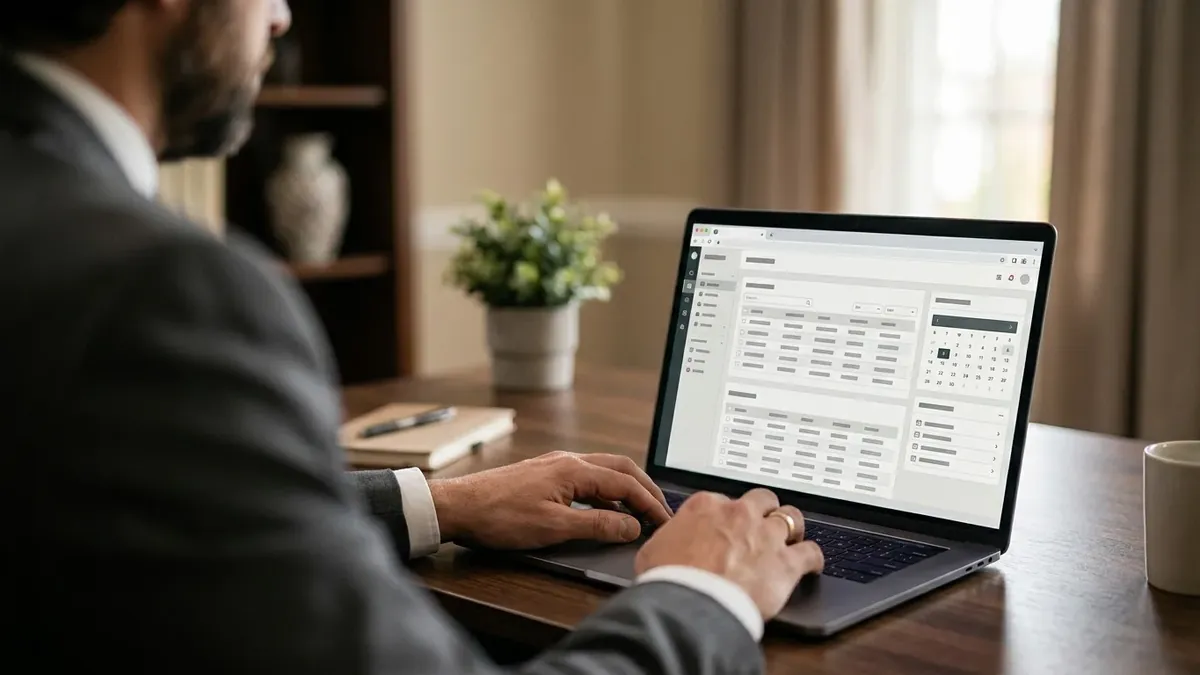
No two funeral homes run the same way, and Kindred isn't asking you to change yours. It is configured around how you already work.
-
Your workflow and checklists
Case steps and checklists are set up to match your process, not a one-size template.
-
Your forms and documents
The paperwork you use is built as forms and document templates that fill from the case, so details are entered once.
-
Your services and prices
Your own services, packages and price list, the way you present them to families.
-
Each location, its own way
One funeral home or several: tailor each location while keeping the whole business consistent.
-
Your name on everything families see
The family portal and your website carry your funeral home's brand, not ours.
Ready today, wherever you are
- Unlimited users and locationsYour whole team signs in. Pricing follows your case volume, not your headcount.
- English or Spanish, per personEach staff member chooses the language of Kindred, and each family can receive the portal in English or Spanish.
- In the cloud, backed upUse it from any device with encrypted data and automated backups. No servers at the funeral home.
- Families sign from homeSend contracts and authorisations for electronic signature.
- Your website and noticesKindred can design and host your website, or publish notices to the one you already have.

What we'll work out together
Kindred accounts run in the United States, Canada and the United Kingdom today. For funeral homes in South Africa, local currency, tax and the paperwork you file are part of the setup conversation, and we'll tell you plainly what's ready and what isn't.
Questions from funeral homes in South Africa
Is Kindred available to funeral parlours in South Africa?
Yes. Kindred has opened to South African funeral homes and parlours. It works in a browser on a computer, tablet or phone, with nothing to install on site. We start by learning how your parlour runs, from collection to the unveiling.
What about pricing in rand, VAT and Home Affairs paperwork?
Kindred accounts currently run in the United States, Canada and the United Kingdom. Pricing in rand, VAT and the paperwork your parlour completes are settled as part of setting up, and we will say clearly what is ready today and what is not.
Does Kindred submit the DHA-1663 to Home Affairs?
No. Kindred does not produce the official notice of death or connect to Home Affairs, and fingerprints are still taken on the form as they are now. Kindred keeps the particulars on the case so they are written down only once and appear on your own documents.
Does Kindred sell funeral policies or process claims?
No. Kindred is not an insurer or a financial services provider. It records each family's policy and burial society details and tracks the claim paperwork as a checklist, while the claim is made with the insurer or society as before.
Can families use the portal in isiZulu, isiXhosa or Afrikaans?
No. The family portal is offered in English or Spanish, and staff choose English or Spanish for themselves. We would rather be clear about that from the start.
Can Kindred keep up with several funerals on one Saturday?
Every service, vigil and burial is an event with its date, time, venue and staff, and staff access can be limited by branch. Dashboards show outstanding work across the business before the weekend arrives.
Tell us how your funeral home works
A person from the Kindred team will reply, usually within one working day, with no obligation.

Please take a moment to complete the form.