
The right funeral home technology doesn't replace the human connection at the heart of your work; it supports it. By reducing administrative burdens and streamlining communication, modern software gives your team more time and focus to dedicate to the families you serve. This shift allows you to provide a higher level of care, making a difficult time more manageable for grieving families.
Before the Arrangement: Clearer First Call and Intake
The family experience begins with the first call. This initial interaction sets the tone for your entire relationship. When a family member calls, they are often in distress and looking for a calm, guiding voice. Funeral home technology helps ensure that your team can be that voice by organizing the intake process, so you can focus on listening rather than scrambling for information.
A disorganized first call can create an impression of chaos. If your staff has to put a family on hold to find a pen, search for a paper intake form, or ask a colleague if they are available for a removal, it adds stress to an already tense situation. A central digital system for first call information means that anyone on your team can capture the necessary details consistently and professionally, whether they are at the front desk, at home after hours, or on the road.
This consistency is crucial. With a structured digital intake form, you ensure that no critical detail is missed. You can collect essential information—such as the decedent’s location, the caller's contact information, and whether a physician or coroner has been notified—in a logical sequence. This information is immediately saved to a central case file, accessible to the entire team. There’s no risk of a misplaced sticky note or an illegible handwritten sheet. The funeral director assigned to the case can review the details before making their first contact with the family, allowing them to be fully prepared and informed.
During the Arrangement: A More Focused and Collaborative Meeting
The arrangement conference is the core of the planning process, and it can be overwhelming for families. They are faced with numerous decisions while navigating their grief. Thoughtful funeral home technology can transform this meeting from a stressful, paper-heavy session into a calm, collaborative, and focused conversation.
Reducing the Administrative Burden in Real Time
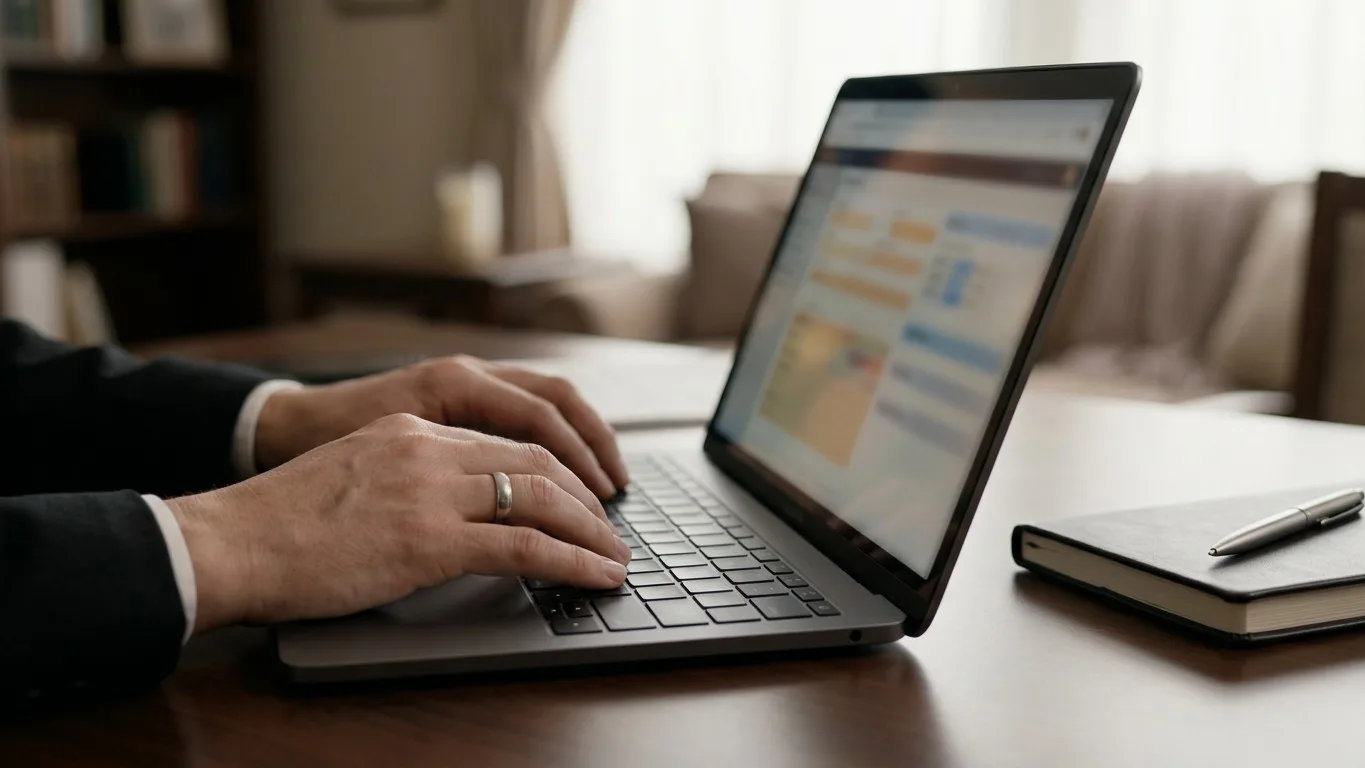
Traditionally, arrangement conferences involve a director taking copious handwritten notes while simultaneously trying to guide a family through emotional decisions. This can lead to a divided focus, where the director is more engaged with their notepad than with the family. Modern tools can alleviate this burden. For example, some platforms offer built-in AI tools that can listen to the arrangement conversation.
With the family's permission, this technology can create a live transcript of the meeting. From that recording, it can generate a summary of key decisions, action items, and even draft obituary content based on the stories shared. The director remains fully present, making eye contact, offering tissues, and providing genuine comfort. The technology acts as a silent assistant, ensuring every detail is captured accurately without distracting from the human element. The director then reviews and confirms all the AI-generated notes, ensuring complete accuracy while having saved significant time on manual data entry.
Visual and Interactive Planning
Instead of asking a family to imagine what a casket or urn looks like from a printed catalog, technology allows for a more visual and interactive experience. Using a tablet or a large monitor, you can show them high-quality images and detailed descriptions of merchandise. You can present service options, package details, and pricing transparently on screen, helping families understand their choices more clearly.
This approach makes the process feel more collaborative. You can adjust selections in real time, and the family can see the financial implications immediately on the statement of goods and services. This transparency builds trust and helps prevent the feeling of being sold to. It empowers families to make informed decisions that feel right for them, both emotionally and financially. A clear, digital presentation is often less intimidating than a stack of papers and price lists, contributing to a calmer atmosphere.
A Central Hub for Family Communication and Collaboration
After the arrangement conference, families often have questions or need to share information. The days following a death are filled with phone calls, emails, and text messages between family members and the funeral home. This can lead to confusion, missed messages, and added stress for both the family and your staff. Funeral home technology can solve this by providing a single, secure place for all communication.
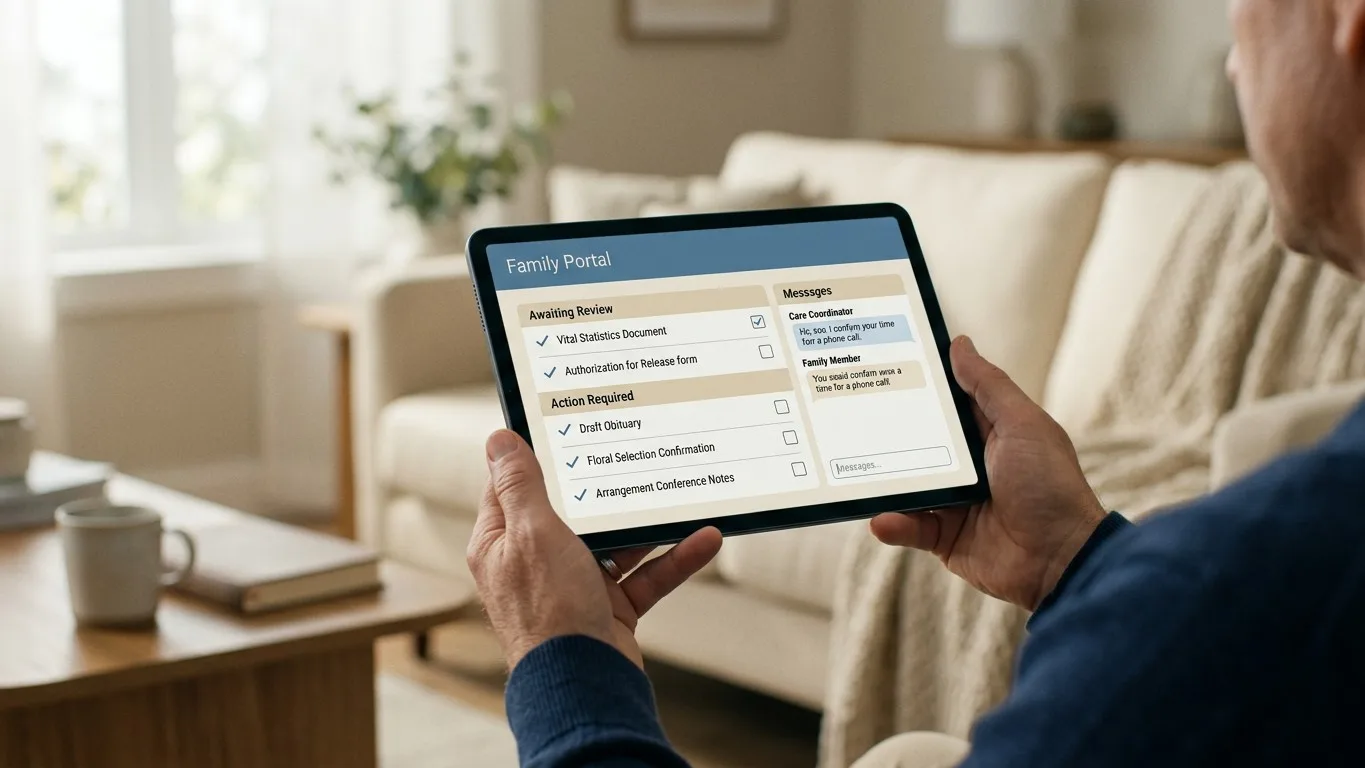
A dedicated, branded family portal is a powerful tool for improving the family experience. Instead of relying on scattered emails and phone tag, families can log into a secure website to collaborate. Here, they can:
- Complete Forms and Sign Documents: Vital statistics information, obituary details, and authorization forms can be completed online at their own pace. This is especially helpful for families who are geographically dispersed. One person can start a form, and another can log in later to add the information they have. E-signature capabilities allow for remote signing of contracts and authorizations, eliminating the need to print, scan, and email documents.
- Review and Approve Information: Families can review the draft obituary, check the details for the death certificate, and confirm service times all in one place. This reduces the chance of costly administrative errors that can cause significant distress, such as a misspelled name or an incorrect service time.
- Stay Informed: The portal can serve as a central source of truth for the schedule of events, upcoming deadlines, and other important information. This proactive communication reduces family anxiety and cuts down on the number of inbound calls to your office asking for updates.
By providing this organized hub, you give families a sense of control and clarity during a chaotic time. It shows that you respect their time and are committed to making the process as smooth as possible.
Simplifying Paperwork and Reducing Errors
One of the most significant sources of stress for families—and liability for funeral homes—is paperwork. From the death certificate to contracts and permits, the number of forms required can be daunting. Funeral home technology that uses a single-entry system dramatically simplifies this process, benefiting both your staff and the families you serve.
The Power of Single-Entry Systems
In a funeral home without integrated software, the same piece of information—the decedent's name, date of birth, social security number—might be typed or written by hand a dozen times or more. It’s entered into the first call sheet, the case management system, the contract, the death certificate worksheet, the obituary, and various permits. Each instance of data entry is an opportunity for a mistake. A typo on a death certificate can delay the issuance of certified copies, which in turn can delay the settlement of life insurance, bank accounts, and other estate matters, causing immense frustration for the family.
Modern funeral home software solves this with a single-entry system. Information is entered once when the case is created. From that point on, it automatically populates every relevant document. When you generate a contract, the family’s information is already there. When you create the obituary, the name, date of birth, and date of death are pulled directly from the case file. This is a core principle behind how to streamline funeral home operations without sacrificing accuracy.
Generating Accurate Forms and Contracts
With a robust software system, you can generate all necessary forms directly from the case file. State-specific forms, veteran benefit applications, and cremation authorizations are pre-filled with accurate data. This not only saves your staff hours of tedious work but also ensures a professional and consistent presentation to the family. When a family receives a packet of documents that are perfectly typed and error-free, it reinforces their confidence in your firm’s competence and attention to detail. This is a subtle but powerful way to enhance the family experience, demonstrating that their loved one's affairs are in capable hands.
Enhancing the Memorialization Experience
Technology can also play a vital role in helping families create a personal and lasting tribute. While traditional services remain important, digital tools can expand the ways a person is remembered and allow more people to participate in the grieving process.
Dynamic Online Obituaries and Tributes
An online obituary is more than just a notice of death; it's a living memorial. Modern funeral home websites, integrated with your case management software, can host rich, interactive tribute pages. These pages can feature photo galleries, videos, and a place for friends and family from around the world to share memories and condolences. This creates a lasting digital space for the community to gather and support one another.
This is particularly meaningful for those who cannot attend the service in person. They can still feel connected and participate in the grieving process by sharing a story or simply reading the tributes left by others. Offering this feature as part of your service shows that you understand the modern nature of families and communities, which are often spread across the country or the globe.
Creating Lasting Digital Keepsakes
The stories, photos, and condolences shared on a tribute wall can be compiled into a beautiful digital or printed memory book. Software can help facilitate this process, gathering the contributions into a professionally designed layout. This provides the family with a tangible keepsake that captures the collective memory of their loved one. Instead of a simple guest book with signatures, they receive a rich collection of personal anecdotes and images. Kindred, for example, allows families and funeral directors to create beautiful printed materials and digital assets directly from case information and family contributions, making memorialization more personal and less time-consuming.
Conclusion: Funeral Home Technology as a Tool for Compassion
Ultimately, the purpose of funeral home technology is not to automate compassion but to enable it. By handling the repetitive, administrative tasks that consume so much of a funeral director's day, modern software frees you to be more present, more attentive, and more supportive. From the first call to the final disposition and beyond, these tools help you provide a seamless, transparent, and compassionate experience.
When technology works silently in the background to ensure accuracy and efficiency, you can focus on what truly matters: caring for families in their time of need. This commitment to service is what builds a funeral home's reputation and ensures that families feel genuinely supported.
If you're interested in seeing how a modern, cloud-based system can help your firm enhance the family experience, we invite you to book a demo of Kindred. See for yourself how the right tools can help you focus more on families and less on paperwork.