Modernizing your funeral home can feel like a contradiction. You’re in the business of human connection during life’s most difficult moments, and technology can seem cold and impersonal. But the goal isn’t to replace compassion with code; it’s to use the right tools to handle administrative burdens, so your team has more time and energy for the families you serve.
A thoughtful approach to how you modernize your funeral home allows you to enhance the human touch, not diminish it. By streamlining the tasks that happen behind the scenes, you create a calmer, more focused environment where your care and expertise can truly shine.
Redefining Modernization: More Than Just New Technology
When funeral directors think about modernization, they often picture new equipment or complex software. But true modernization is a shift in mindset before it’s a purchase order. It starts with identifying the points of friction in your daily operations—the small, repetitive tasks that consume time and create stress for your staff.
Think about the time spent searching for a misplaced paper file, deciphering a colleague's handwriting on an arrangement sheet, or calling a family for the third time to get a signature on a form. Consider the stress of coordinating staff and vehicles on a whiteboard, where one erasure can cause a cascade of confusion. These are not just minor inconveniences; they are operational drains that pull your focus away from families.
Modernizing means looking at these workflows and asking: “Is there a better way to do this?” The goal is not to adopt technology for its own sake, but to solve specific problems. The right tools should make your operations smoother, more accurate, and less stressful. When your team isn't bogged down by administrative chaos, they can be more present, patient, and compassionate during arrangement conferences and services. This operational calm is a direct benefit to the families you serve, who feel the stability and competence of your firm.
The Foundation of a Modern Funeral Home: Digital Case Management
The single most effective step to modernize a funeral home is to adopt a central system for case management. For generations, the physical case file—a manila folder filled with notes, forms, and documents—has been the standard. While familiar, this system is prone to errors, loss, and inefficiency, especially when multiple staff members need access to the same information at once.
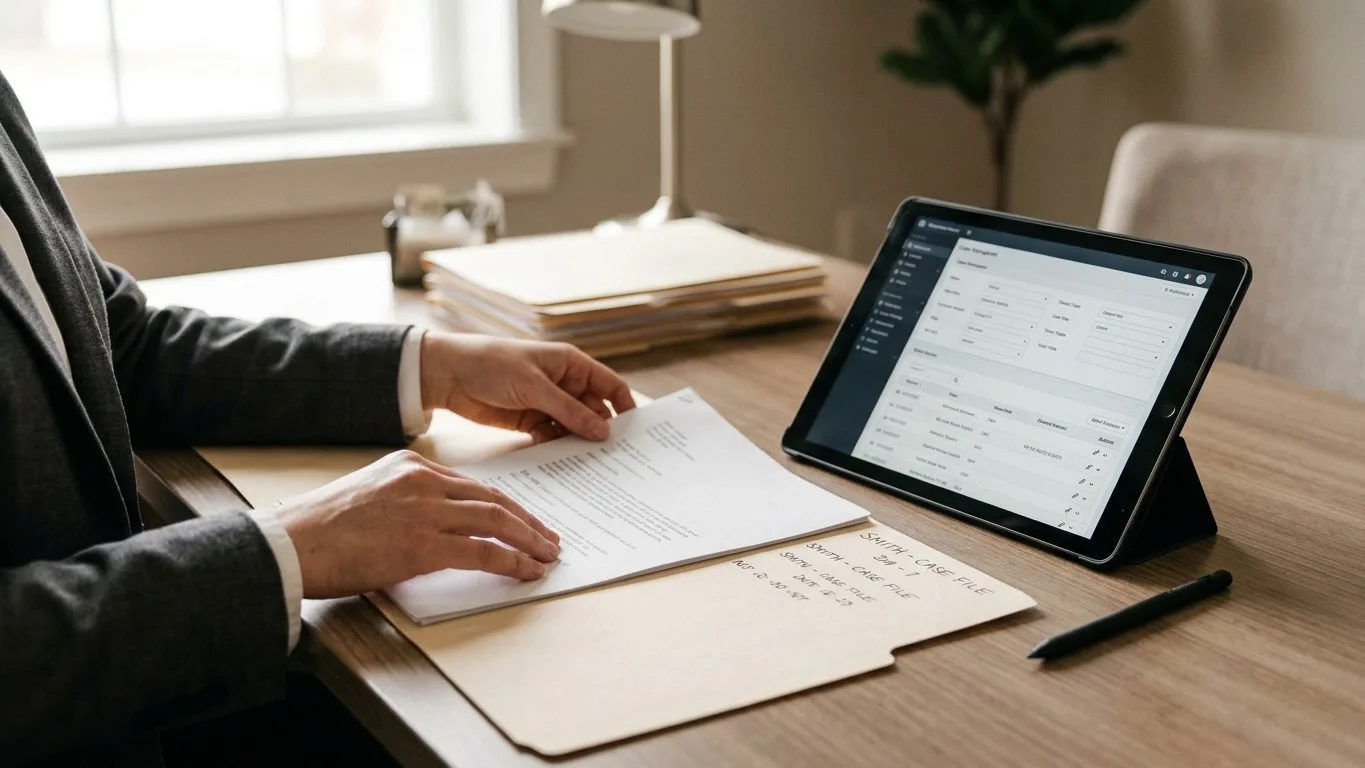
A digital case management system moves that folder into a secure, accessible, cloud-based platform. Every piece of information related to a case, from the first call to the final disposition, lives in a single, organized record. This includes:
- Decedent information and vital statistics
- Family contact details
- Arrangement conference notes
- Service schedules and locations
- Merchandise selections
- Contracts and authorization forms
- Internal checklists and tasks
By centralizing this data, you eliminate the root cause of many administrative headaches. Instead of hunting for a physical file or calling a colleague to confirm a detail, any authorized team member can access the complete, up-to-date case record from any computer with an internet connection. This has several profound benefits for your firm and the families you serve.
First, it ensures consistency. Everyone is working from the same information, which dramatically reduces the risk of miscommunication. The details for the obituary are the same as the details on the death certificate application. The service time is consistent across the director’s schedule, the website, and the family’s understanding. This level of accuracy prevents the kinds of errors that can cause significant distress to a grieving family.
Second, it improves efficiency. Information entered once during the first call can automatically populate contracts, forms, and obituaries. This not only saves hundreds of hours of repetitive data entry but also prevents the typos and transposition errors that inevitably occur when information is re-keyed multiple times. This is a core principle of how to avoid duplicate data entry and its hidden costs.
Finally, it provides visibility. Managers can see the status of every case at a glance, ensuring that no tasks fall through the cracks. Whether it’s confirming that a permit has been filed or that a specific piece of merchandise has been ordered, a central system provides the oversight needed to run a tight, professional operation.
Streamlining Communication With Families
The arrangement process involves a constant flow of information between your firm and the family. Questions, decisions, and documents go back and forth, often creating a flurry of phone calls, emails, and in-person visits at a time when families are already overwhelmed.
Modernizing this communication doesn't mean replacing personal conversations with automated messages. It means providing clear, convenient, and secure channels for the administrative aspects of the arrangement, freeing up your personal interactions for more meaningful support. One of the most effective tools for this is a family portal.
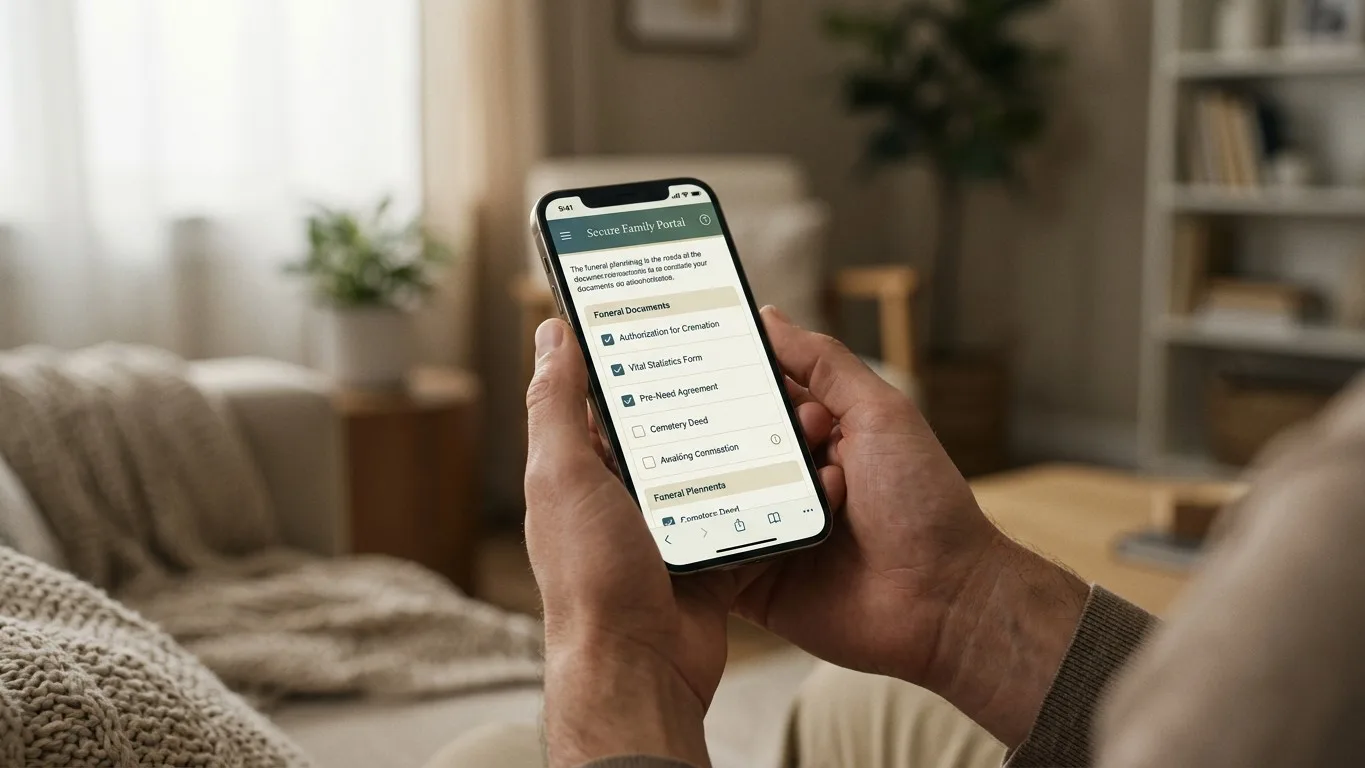
A family portal is a secure, private website where a family can log in to collaborate with your funeral home. Here, they can:
- Complete forms online: Instead of printing, filling out, scanning, and emailing back vital statistics worksheets or authorization forms, families can type the information directly into a secure online form. This is not only more convenient for them but also ensures the information you receive is legible and accurate.
- Sign documents electronically: Chasing wet-ink signatures is a major bottleneck. Modern e-signature tools allow families to review and sign contracts and authorizations from their own homes, on their own time. This is particularly helpful for family members who live out of state. It’s crucial to use a system that is secure and legally binding; always confirm the specific requirements in your jurisdiction.
- Access important information: You can share service details, drafts of the obituary for their review, and other key documents in the portal. This gives the family a single place to find information, reducing the number of calls to your office to ask for details they’ve misplaced.
By providing these tools, you are showing respect for the family’s time and reducing their administrative burden. They no longer need to coordinate a trip to the funeral home just to sign a paper or drop off a photograph. This convenience is a powerful expression of care. It allows your phone calls and meetings to be focused on guidance and support, not logistics and paperwork.
Using Automation to Reduce Administrative Work
The word “automation” can sound impersonal, but in a funeral home context, its purpose is to handle the repetitive, non-emotional tasks that are essential to operations but do not require a human touch. The goal of automation is to free up your highly skilled, compassionate staff to do the work that only people can do.
Think about the process of generating all the necessary paperwork after an arrangement conference. Based on your notes, you need to create a statement of goods and services, multiple authorization forms, a death certificate worksheet, an obituary, and perhaps internal work orders for the prep room or crematory. Each of these documents uses much of the same core information: names, dates, and service details. Manually creating each one is time-consuming and invites error.
Modern funeral home software automates this process. By entering the case information once, you can generate all necessary documents with a few clicks. The system pulls the correct data into the correct fields on each form, ensuring accuracy and consistency. This is a perfect example of how automation supports the human element. An arranger who saves an hour on paperwork is an arranger who has an hour to spend with a family, answer their questions, or simply be a calm, reassuring presence.
Checklists are another area where automation can be invaluable. Every funeral home has a standard set of procedures for each case. A digital checklist, integrated with your case management system, ensures that no step is missed. As tasks are completed, they can be checked off, providing a clear record of progress. This is especially useful in larger firms or when managing multiple services simultaneously, as it provides clarity and accountability for the entire team.
Kindred, for example, is designed around this principle. Case information is entered once and then used to generate contracts, state-specific forms, and financial records. This single-entry system minimizes the administrative work required for each case, allowing directors to focus on serving families. Built-in checklists ensure that every detail is handled correctly and on time.
Embracing Practical AI in the Arrangement Room
Artificial intelligence is another area that can seem at odds with the personal nature of funeral service. However, practical AI tools are emerging that are designed not to replace funeral directors, but to act as their most efficient assistants, particularly during the arrangement conference.
An arrangement conference is a delicate and complex conversation. The funeral director must be an active listener, a compassionate guide, a grief expert, and a meticulous note-taker, all at the same time. It is incredibly difficult to do all of these things perfectly. Inevitably, while you are focused on comforting a family member, you might miss a key detail they mention. While you are writing down a name, you might miss the emotional cue that follows.
This is where AI can help. Some modern funeral home software now includes AI tools that can listen to an arrangement conference. With the family's permission, the system can:
- Create a full transcript: The AI can generate a complete, searchable text transcript of the entire conversation. If you later wonder, “Did they say the service was at 10 or 11?” you can quickly search the transcript instead of having to call the family and ask, which can create uncertainty.
- Summarize the meeting: The AI can analyze the transcript and produce a concise summary of the key decisions made, the action items for both the family and the funeral home, and the overall tone of the conversation. This gives you a high-level overview to review immediately after the family leaves.
- Extract key information: The system can identify specific pieces of information mentioned in the conversation—like names of pallbearers, song choices, or biographical details for the obituary—and suggest them as entries for the digital case file.
It is essential that a human being—the funeral director—reviews and confirms every piece of information suggested by the AI before it is saved to the case. The AI is a tool for drafting, not for final decision-making. It takes the pressure of perfect, simultaneous note-taking off your shoulders, allowing you to be fully present with the family. Your focus can remain on their faces, their words, and their needs, knowing that the administrative details are being captured accurately in the background. This is perhaps the ultimate example of using technology to enhance the human touch.
Choosing Technology That Aligns With Your Values
Not all technology is created equal. When deciding how to modernize your funeral home, it's critical to choose tools and partners that understand the unique nature of funeral service. A generic business software may have a great accounting module, but it won't understand the workflow of a death certificate or the specific compliance language required on a cremation authorization.
Look for software built by people with experience in funeral service. They will understand that the ultimate goal is not just efficiency, but compassionate and dignified care. Their software will be designed with that in view. For example, a family portal should be simple, calm, and easy to navigate, not cluttered with aggressive sales pitches or confusing options. The language used in the software should be respectful and professional.
When evaluating a new system, ask yourself these questions:
- Does this tool solve a real problem for my staff or for the families I serve?
- Will it make our work more accurate and less stressful?
- Is it designed with the dignity of the deceased and the comfort of the family in mind?
- Is the provider a partner who understands my business and will be there to support me?
The company behind the software matters as much as the software itself. LarkTek, the company that builds Kindred, was founded by a family that has been in funeral service since 1885. That history informs every aspect of the software’s design, from the flow of a case file to the quiet, respectful interface of the family portal. This deep understanding of the profession ensures that the technology serves the mission of the funeral home, rather than distorting it.
Conclusion: Technology in Service of Compassion
Modernizing a funeral home is not about chasing trends or replacing the personal connections that define your work. It is about thoughtfully adopting tools that remove administrative friction, reduce the chance of error, and free your team to do what they do best: care for families.
By centralizing your case management, streamlining communication, and automating repetitive tasks, you create an environment of calm competence. This stability is a quiet gift to both your staff and the families they serve. The right technology works silently in the background, making your operations more precise and reliable, so your human touch can be more present and powerful than ever.
If you're exploring how to bring these benefits to your firm, see how Kindred’s cloud-based platform is designed to support the modern funeral home. Book a demo to see how our case management, family portal, and built-in AI tools can help you serve families with greater focus and care.