
Managing funeral home cash flow is a constant challenge, balancing compassion for families with the financial realities of running a business. Delays between providing services and receiving payment can strain your firm’s resources. Adopting digital invoicing and credit card processing is a direct way to stabilize your finances, reduce administrative tasks, and offer families a more convenient way to settle their accounts.
The Unique Cash Flow Challenges in Funeral Service
Unlike a typical retail business, a funeral home faces distinct financial pressures that complicate cash flow. You incur significant upfront costs for merchandise like caskets and urns, as well as third-party cash advance items such as crematory fees, clergy honorariums, and death certificate copies. These expenses are often paid out of pocket by your firm long before you receive payment from the family.
The payment timeline itself is frequently extended. Families may need to wait for life insurance policies to pay out or for an estate to be settled, which can take weeks or months. During this time, your funeral home is effectively providing an unsecured, interest-free loan. The sensitive nature of the arrangement conference also means that financial conversations must be handled with immense care, which can sometimes lead to delays in establishing clear payment terms.
The Hidden Costs of Paper Invoices and Checks
The traditional method of printing and mailing paper invoices creates a significant lag in the payment cycle. This process relies on postal delivery times, the family's ability to write and mail a check promptly, and the time it takes for the check to clear the bank. Each step introduces potential delays that directly impact your funeral home cash flow.
This manual system is also a source of administrative work. Staff must spend time printing, folding, and stuffing envelopes, then tracking payments as they arrive. If an invoice is lost or a check is delayed, it requires follow-up phone calls that are time-consuming for your team and can be uncomfortable for a grieving family. Relying solely on checks and cash also fails to meet the expectations of many families who are accustomed to the convenience and security of paying for major expenses online.
How Digital Invoicing Improves Funeral Home Cash Flow
Digital invoicing is the practice of sending invoices electronically, typically through email or a secure online portal. This simple change can dramatically shorten your payment cycle. An invoice that once took days to arrive by mail is now delivered instantly, allowing the family to review it and make a payment on the same day.
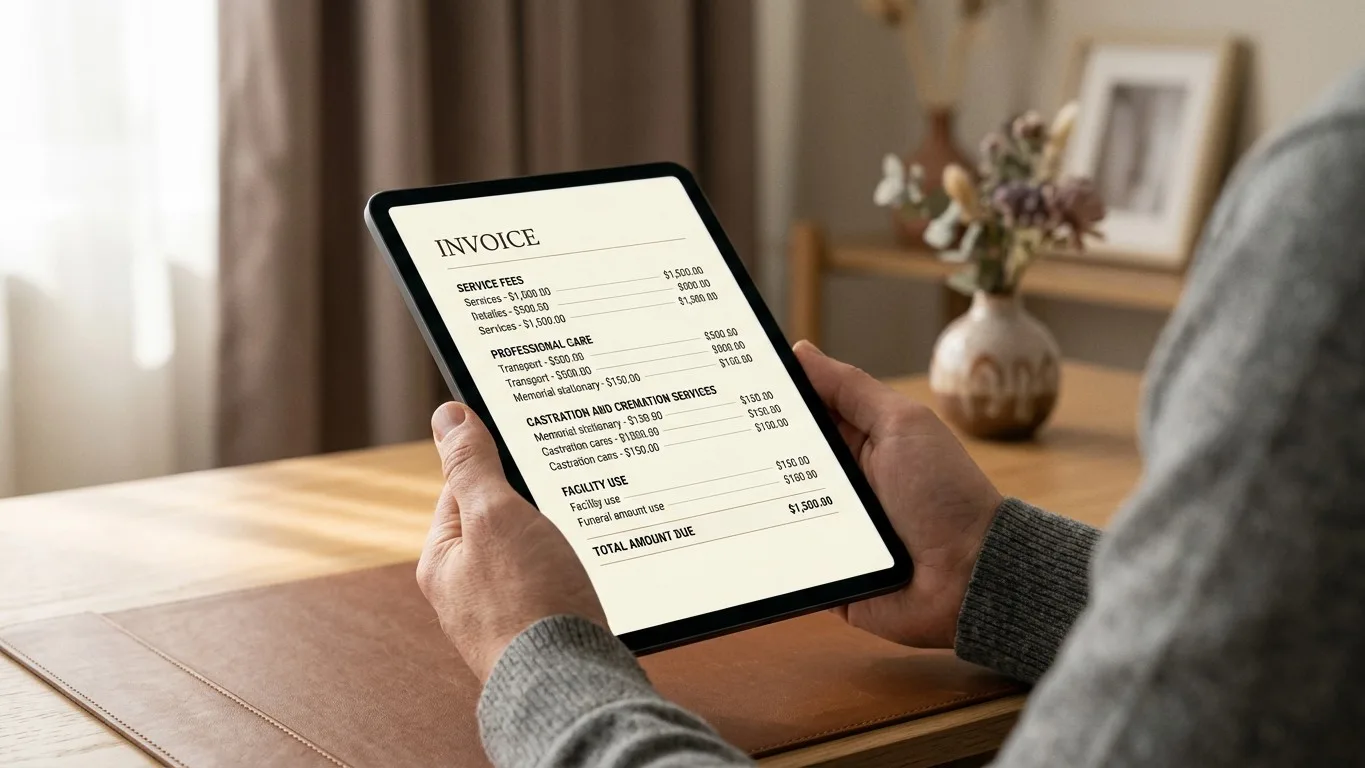
This approach offers several key advantages for your firm:
- Accelerated Payments: The most significant benefit is speed. By removing the delays of postal mail and manual check processing, you get paid faster, which directly improves your working capital.
- Reduced Administrative Burden: Your staff no longer needs to spend hours on manual billing tasks. Digital systems can automate invoice creation and send payment reminders, freeing up your team to focus on serving families. This is a core part of an efficient post-arrangement workflow.
- Improved Accuracy and Tracking: Digital invoices are generated directly from case data, reducing the risk of manual entry errors. Payment status is updated automatically, giving you a clear, real-time view of your accounts receivable without having to sift through paperwork.
Why Offering Credit Card Processing is Essential
Integrating credit card and ACH processing with your digital invoices gives families a simple and immediate way to pay. When a family receives a digital invoice, they can click a link and enter their payment information in a secure online form. This removes the friction of having to find a checkbook, buy stamps, or make a special trip to the funeral home.
For many families, using a credit card is the preferred method for managing large expenses. It allows them to pay promptly while giving them the flexibility to manage their personal finances, especially when waiting on funds from an estate. It also provides a clear digital record of the transaction for their own bookkeeping.
From a business perspective, accepting online payments is a critical step in modernizing your operations. While payment processors do charge a fee for their services, this cost is often outweighed by the benefits of faster payments, reduced administrative overhead, and fewer accounts receivable to manage. Be sure to research processors that offer transparent pricing and secure transaction handling. Regulations regarding convenience fees can vary, so always confirm what is permissible in your state or province.
Implementing a Modern Payment Workflow
Transitioning to a digital payment system is a straightforward process that can be broken down into manageable steps. A well-planned implementation ensures a smooth change for both your staff and the families you serve.

Choose the Right Software and Payment Processor
Select a funeral home management system that includes integrated invoicing and payment processing. A unified platform like Kindred, which connects case management with accounting and payment tools, ensures that all financial data is accurate and centralized. Kindred integrates with payment processors like Stripe to handle credit card and ACH transactions securely. This eliminates the need to manually reconcile payments from a separate terminal with your case files.
Update Your Contracts and Payment Policies
Review your Statement of Funeral Goods and Services and other contracts to clearly outline the payment methods you accept. State your payment terms, including when payment is due. If you plan to pass on processing fees as a convenience charge, ensure this is clearly disclosed and compliant with local regulations. Transparency from the start prevents misunderstandings later.
Train Your Staff
Your funeral directors and administrative staff are key to a successful rollout. Train them on how to generate and send digital invoices, explain the online payment option to families, and answer any questions that may arise. When your team is confident with the new process, they can present it as a helpful, convenient option for families, rather than just a business requirement.
Communicating New Payment Options to Families
Introducing new payment options should be framed as a benefit to the family. During the arrangement conference, when discussing financial matters, explain that you offer a secure online portal for their convenience. You can describe it as a simple way to handle the invoice from the comfort of their own home, without needing to worry about mailing a check.
Most families will appreciate the flexibility and ease of this option. For those who still prefer to pay by check or in person, you can continue to accommodate them. The goal is to provide more choices, not to eliminate traditional methods entirely. By presenting digital payments as a modern, helpful service, you reinforce your firm’s commitment to making a difficult time a little bit easier. This thoughtful approach to operations is just as important as maintaining your facilities, a topic explored in our guide to funeral home maintenance.
Conclusion: Taking Control of Your Financial Health
Improving funeral home cash flow is fundamental to the long-term health of your business. By moving from slow, manual billing processes to digital invoicing and online payments, you can shorten payment cycles, reduce administrative workload, and provide a better experience for families. This modernization isn't just about technology; it's about building a more resilient and efficient funeral home that can continue to serve its community for years to come.
Kindred helps you manage every aspect of a case, from first call to final payment, in one integrated system. To see how our built-in invoicing and payment processing can improve your firm's cash flow, book a demo with our team.